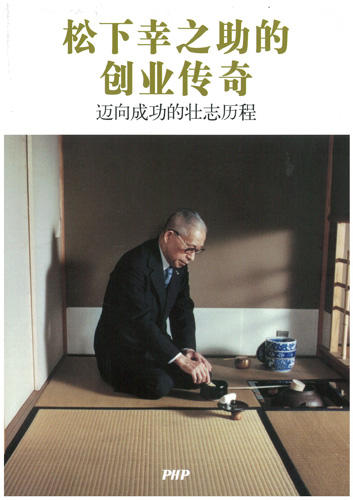
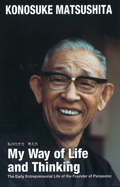
In the late autumn of 1904, Japan was caught up in the Russo-Japanese War. All alone, a nine-year-old boy left his hometown for Osaka to begin an apprenticeship. His mother, in tears, watched him board the train at Kinokawa Station in Wakayama. Her lonely figure as the train pulled out of the station was a scene that was to be deeply engraved in his mind forever. His first days on his own began. Struggling in the big city, he lived through his days with hope for the future.
This was the start of the career of Konosuke Matsushita, who went on to live out a life filled with lofty aspirations.
In 1918, 23-year-old Matsushita set up his own business and began working on his own inventions. Relentlessly pursuing innovation in products and management, that tiny workshop grew into the global corporation we know today as Panasonic.
My Way of Life and Thinking is the self-told story of one of the most outstanding entrepreneurs of the 20th century. No ordinary autobiography, this inspirational volume provides insight into Matsushita’s approach to life and philosophy of management and is a testimony to his lifelong pursuit of entrepreneurship, leadership and an idealistic vision that began at an early age. The implications of his story are powerfully relevant today to people seeking to question what it is to live a meaningful life.
◆E-book ◆Japanese(日本語ページ)
more